How to Compare Construction Quotes in Rwanda | White Rock Ltd
How to Compare Construction Quotes in Rwanda: 8 Things to Check Before You Choose
If you have received more than one construction quote, it can be tempting to compare the totals and choose the lowest. But two prices are only comparable when they cover the same work, use similar specifications and make their assumptions clear.
A quote that looks cheaper may leave out important items. A higher quote may include work, materials or services that another builder has excluded. Before you decide, compare the detail—not just the last line.
Here are eight practical checks for homeowners and property developers planning a project in Rwanda.
Before you compare: give each contractor the same information
For a fair comparison, share the same project brief, drawings, material specifications, site information and scope of work with every contractor. If some details are not ready, tell each bidder and ask them to state their assumptions in writing.
If one contractor prices a complete package while another prices only part of the work, their totals do not tell you which offer is better. First make sure you are comparing the same project.
1. Confirm exactly what work is included
Check whether each quote covers the same activities. Depending on your project, these may include site preparation, excavation, foundations, structural work, roofing, finishes, electrical and plumbing installations, and external works.
Also check which professional services are included. Is the offer for construction only, or does it include design, engineering coordination, approvals support, supervision or project management? Do not assume that a service is included just because it was discussed in a meeting.
Ask each contractor to label items clearly as included, excluded, allowed for, or not applicable. This simple step can reveal major differences before work begins.
2. Read the Bill of Quantities—not only the total
Where a Bill of Quantities (BoQ) is available, check the descriptions, quantities, units and rates. Do they appear to refer to the same drawings and specifications? Are any items grouped into a single broad allowance that would be clearer if broken down?
If a quote is presented as one lump sum, ask for a reasonable breakdown of the main work sections and the assumptions behind the price. A clearer breakdown helps you ask useful questions and understand how a design change might affect the budget.
A BoQ is a comparison tool, not a substitute for agreeing the final scope. Make sure the drawings, specifications and quote all describe the same version of the project.
3. Compare material specifications and finish levels
Words such as “standard finish” or “quality materials” can mean different things to different people. Check what is actually specified for key items, such as roofing, windows, tiles, sanitaryware, electrical fittings and paint.
Where a brand or product is not yet selected, ask for the required performance, quality level or an agreed allowance. Find out how alternatives will be proposed and approved. This helps prevent misunderstandings if a particular product is unavailable or the client wants to change a finish later.
The aim is not necessarily to choose the most expensive specification. It is to understand what each price buys and decide which option suits your priorities and budget.
4. Look for exclusions and assumptions
Read the notes at the end of each quote carefully. Ask whether the price includes or excludes items such as:
- Site clearance, demolition or removal of excavated material
- Additional ground or soil investigations, if needed
- Temporary site facilities and construction access
- Utility connections or other off-site works
- Permit documentation, authority submissions or related charges
- Testing, specialist installations, fixtures or appliances
- Boundary walls, paving, drainage, landscaping and other external works
These items will not apply in the same way to every project. The important thing is to make the assumptions visible and decide who is responsible for each one before signing.
5. Check the proposed programme and who will manage the work
Ask for a realistic programme showing the expected start conditions, main milestones and estimated construction duration. A short timeline is not automatically a better one; ask how the contractor plans to sequence the work and what could affect the dates.
Clarify who your day-to-day contact will be, who coordinates the site team and how progress will be communicated. If your project depends on client decisions, approvals, payments or information from other parties, ask how those dependencies are reflected in the programme.
6. Understand payment terms and how changes are handled
Compare when payments are due and what progress or deliverable triggers each payment. Ask how any advance payment is treated, what documentation accompanies payment requests, and what amount—if any—is due at completion or handover.
Construction projects can change as decisions are made or new site information becomes available. Before work starts, agree on a written process for pricing and approving changes. It should be clear who can request a change, how its cost and time impact will be assessed, and when written approval is required.
Make sure the agreed drawings, BoQ, programme, payment terms and responsibilities are recorded in the contract, not left only in emails or verbal discussions.
7. Ask how quality, safety and handover will be managed
Ask who checks that work follows the approved drawings and specifications, what inspections or tests are planned for the project, and how issues are recorded and resolved. Clarify how site safety is managed and what information or documents you should expect at handover.
It is also useful to agree how incomplete or defective items will be noted and addressed before the project is considered complete. The process should be understandable to both the client and the contractor.
8. Check relevant experience and communication
Look for experience that is relevant to your type and scale of project. Ask to see examples of completed work, and—where appropriate—request a site visit or a reference with the owner's permission. Check that you understand who is responsible for design, engineering, construction and communication under the proposed arrangement.
You can browse White Rock Ltd’s project showcase and project galleries to see the types of work featured on the company website. During your discussions, notice whether questions are answered clearly and whether important decisions are confirmed in writing.
A quick checklist before you choose
Before accepting a quote, make sure you can answer these questions:
- Are all contractors pricing the same drawings and scope?
- Can I see what is included, excluded and treated as an allowance?
- Are the quantities and material specifications clear enough to compare?
- Do I understand the timeline, payment terms and change process?
- Is it clear who manages quality, safety, communication and handover?
- Have I reviewed relevant work and confirmed who will be responsible for delivery?
If any answer is unclear, ask for a written clarification and an updated quote. A short conversation now can prevent a costly misunderstanding later.
Choose clarity, not just the lowest number
The best quote is not always the cheapest or the most expensive. It is the offer that matches your requirements, explains its assumptions, and gives you a clear basis for agreeing the work, cost, timeline and responsibilities.
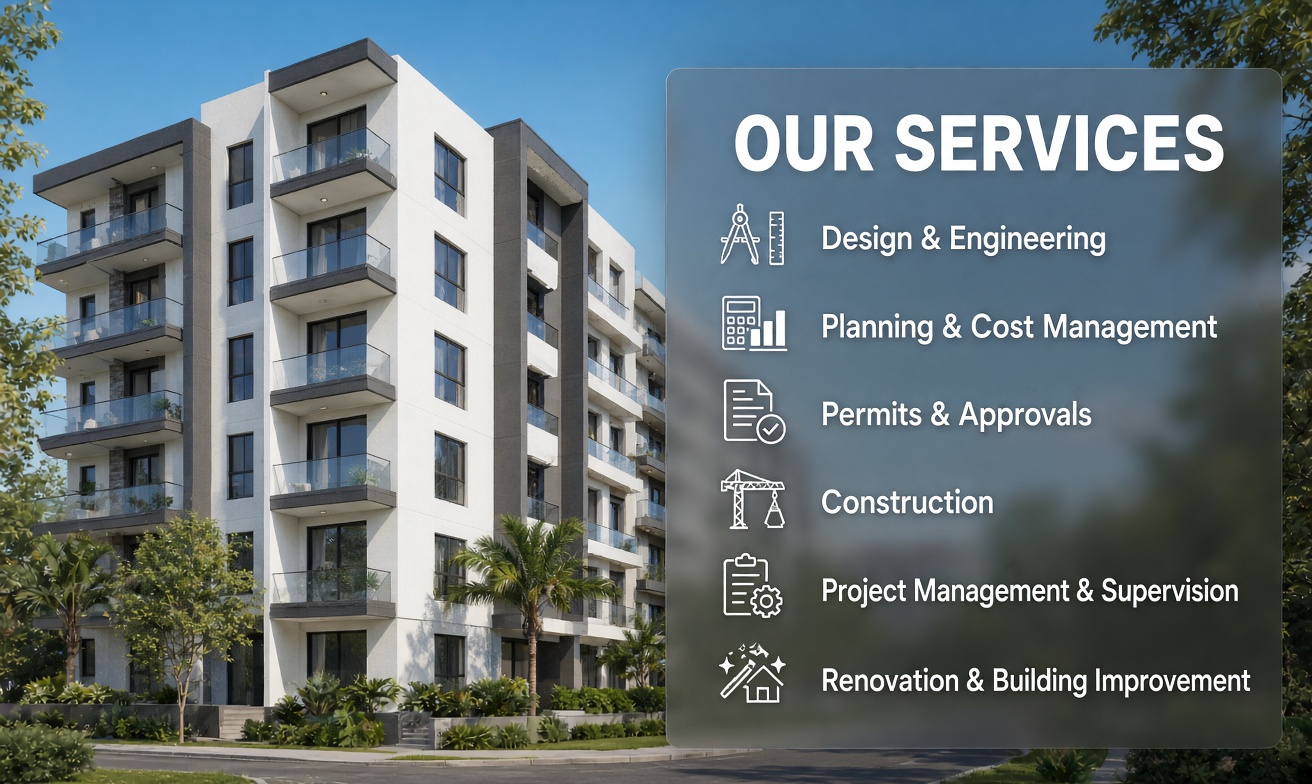
White Rock Ltd provides design and construction services for residential, commercial and mixed-use projects in Rwanda. If you are preparing a project, bring your drawings, site information or initial brief to a discussion with the team. You can learn more about White Rock’s services or contact White Rock Ltd to discuss your project.
White Rock Ltd
Building with Precision. Delivering with Integrity.